Adhesives for printing industry
Adhesives for bookbinding and the printing industry
Adhesives for the printing industry are one of the key factors affecting binding quality, label durability, and the consistency of packaging production. A properly selected bookbinding adhesive stabilizes the process on the machine, reduces the risk of delamination and complaints, and improves the aesthetics of the finished product.
At Smart Printing Solution, we help you choose the right adhesive for a specific application and technology: bookbinding, packaging bonding, and pressure-sensitive labels. Depending on your process requirements, we recommend solutions such as hot-melt, PUR, PSA, and water-based dispersion adhesives—taking into account the substrate type (paper, cardboard, film), line speed, and operating conditions (temperature, humidity, open time). Browse adhesives by application or type—and if you need support, we’ll prepare a recommendation along with technical data sheets.
How to choose the right adhesive for bookbinding work?
Selecting the right adhesive in the printing industry depends on many factors: the type of material, the printing technology, machine operating speed, and the final application of the product. To make your choice easier, we have prepared two clear paths that will help you quickly reach the appropriate solution.
Printing adhesives – applications
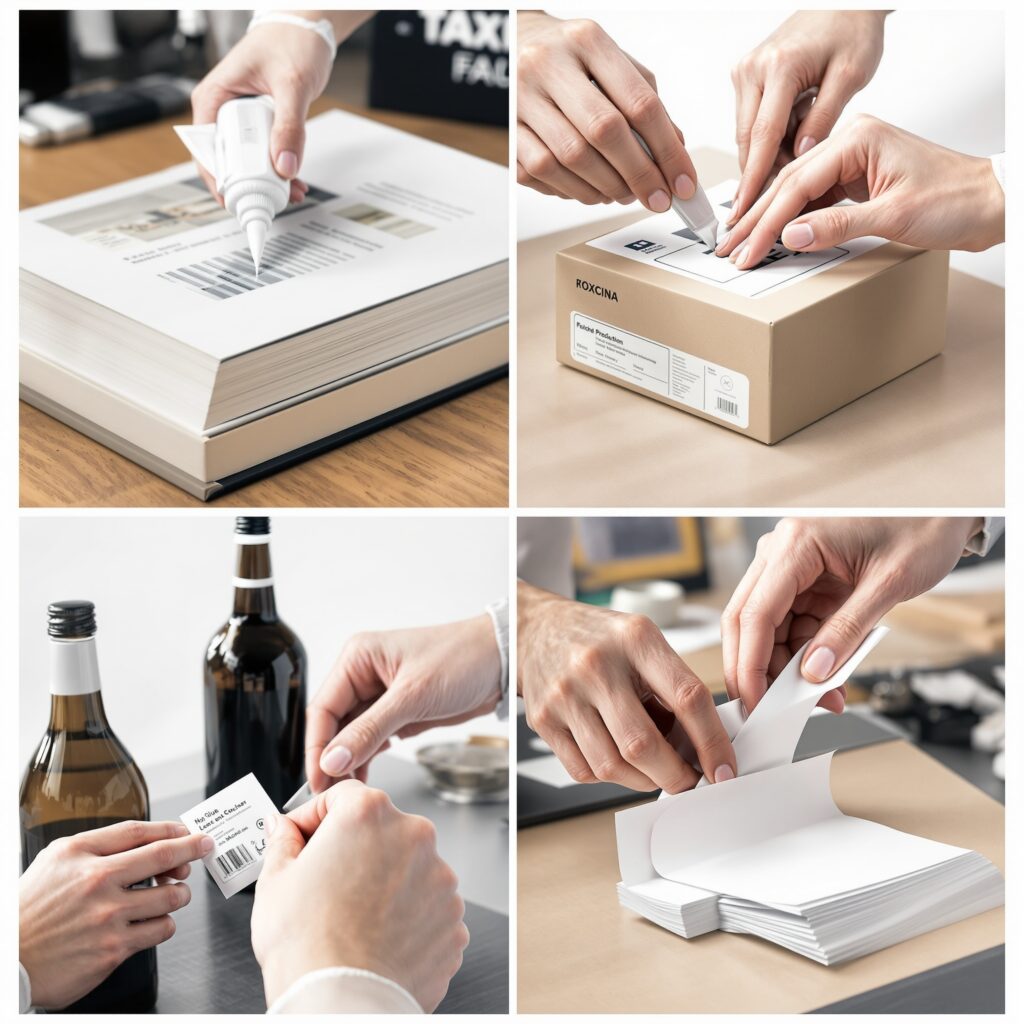
If you’re looking for an adhesive for a specific process—such as bookbinding, labeling, packaging assembly, or bonding printed components—start with the application. This selection method will help you quickly find products designed precisely for your technology and type of work.
Printing adhesives – types
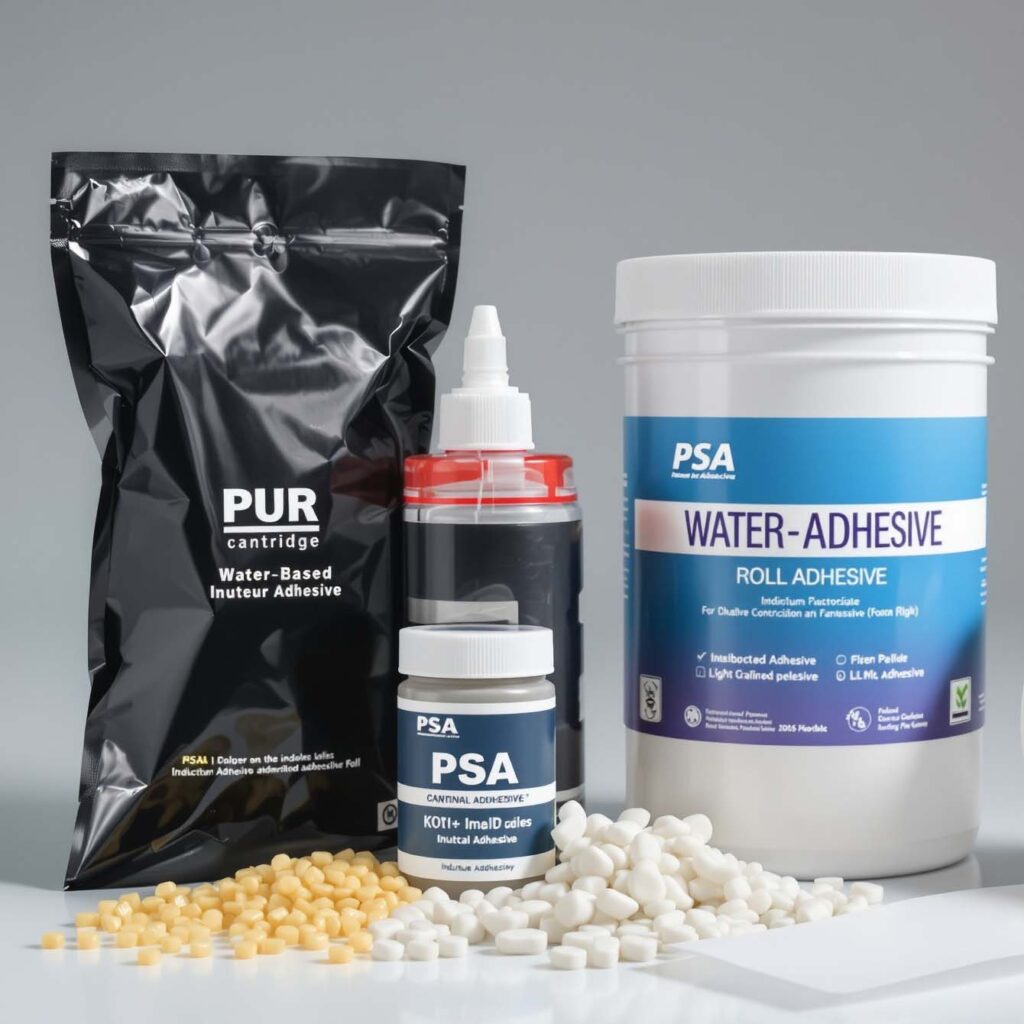
If you use a specific type of adhesive—such as hot-melt, PUR, PSA, or dispersion—you can quickly find products that match that technology.
This is a convenient option for those who already know which type of adhesive works best in their production processes.
Frequently Asked Questions about printing adhesives
How do you choose the right printing adhesive for a specific application?
Selecting an adhesive starts with defining the process: bookbinding, labeling/label production, or packaging bonding. Next, assess the substrate the adhesive will be used on (paper/cardboard/film, varnish, laminate), the machine speed, and the required strength and resistance (temperature, humidity, abrasion). Finally, choose the technology—hot-melt, PUR, PSA, or a dispersion adhesive—and verify the parameters in the technical data sheet.
Which hot-melt adhesive should you choose—PUR or EVA? Which is better for bookbinding?
If you need maximum binding durability (e.g., difficult papers, coated covers, heavy spine stress), PUR adhesive is usually the better choice—it provides a very strong and flexible bond. Hot-melt (e.g., EVA) is often chosen when fast setting and high throughput in mass production are the priority. The final decision depends on the paper type, book block design, and machine parameters.
Which bookbinding adhesive works best for coated papers and difficult substrates?
With coated or varnished papers, or substrates with low absorbency, bond adhesion and joint resistance are critical. In practice, PUR adhesives or properly selected hot-melt formulations are often used—matched to the substrate and the operating temperature. It’s also worth paying attention to surface preparation (paper dust, humidity, and component temperature), as it affects bonding stability.
Which adhesive should you choose for label production or the labeling process?
PSA (pressure-sensitive) adhesives are selected based on the label type and end-use conditions: glass/plastic/metal substrates, exposure to moisture, cold storage, temperature changes, or UV radiation. The application method (manual vs. automatic) and the required level of repositionability also matter. It’s best to choose PSA according to the specific process, e.g., “labels for chilled products,” “bottle labels,” “labels for flexible packaging,” and so on.
Which adhesive for cardboard packaging and boxes?
For packaging, fast setting and repeatable performance on high-speed lines are often crucial, which is why hot-melt and selected dispersion (water-based) adhesives are popular. The choice depends on the board type, the bonding surface (uncoated vs. laminated), and storage and transport conditions. If the packaging is used in demanding environments (cold, moisture), it’s worth selecting an adhesive based on the bond’s resistance.
What is an adhesive’s “open time” and why is it important?
Open time is the period during which the applied adhesive remains workable and can form an effective bond. If the open time is too short, the adhesive may start setting before the parts are pressed together, which can lead to a weaker bond. If it’s too long, the process may become slower and less stable. In the printing industry, open time is selected to match machine speed, operating temperature, and the substrate type.
Why does the adhesive “not hold” even when applied correctly?
The most common causes are: adhesive temperature that is too low or too high, a contaminated surface (dust, silicone, oils), an incorrect amount of adhesive, insufficient pressure time, or an open time that doesn’t match the process. Problems can also result from difficult substrates (varnish, laminate) and may require a different technology (e.g., PUR instead of standard hot-melt) or adjustments to process settings.
Can one adhesive be universal for books, labels, and packaging?
Usually, it’s not worth using a “one-adhesive-fits-all” approach, because bookbinding, label production, and packaging bonding have different requirements for adhesion, flexibility, and resistance. In printing and converting, different adhesive groups are used: hot-melt and PUR are often used for binding, PSA for labels, and hot-melt/dispersion adhesives for packaging. “Universal” solutions tend to fall short when you’re dealing with demanding substrates and high production speeds.